

By Rodger Dean Duncan
Are you a clutter bug?
Has that treadmill become no more than a place to hang laundry?
Is your garage so crammed with litter that your car spends every season out on the driveway?
Does your basement resemble an archeological dig?
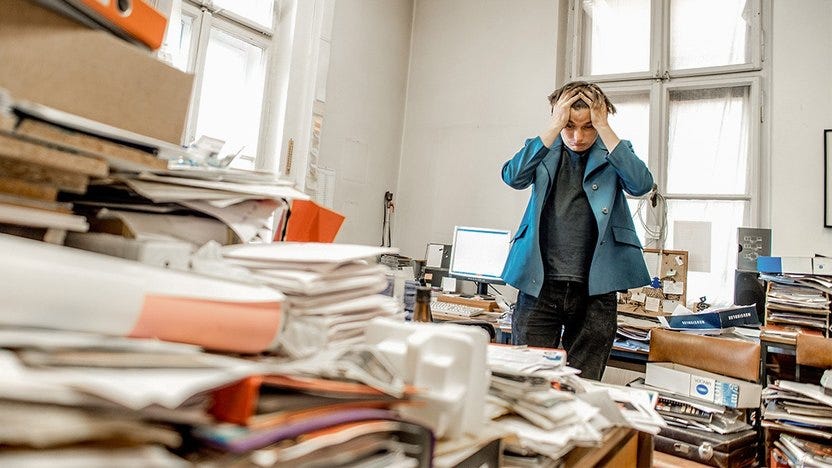
What about your home office? Is the file you desperately need for the next Zoom call buried under that stack of catalogues from a store where you haven’t shopped since 2009?
In your heart of hearts do you realize you have a problem with “too much stuff” but you just can’t seem to get a grip on how to manage it?
Yes, you are a clutter bug.
You could benefit by a piece of advice from Wendell Berry. He says, “Don’t own so much clutter that you will be relieved to see your house catch fire.”
Who is Wendell Berry? He’s an environment activist. How ironic.
An excellent source of specific “how to” advice on simplifying your life is Tracy McCubbin. She’s owner of a home organization company called dClutterfly. Her books are Making Space, Clutter Free and Make Space for Happiness. She’s regularly featured in major media including the Washington Post, the Wall Street Journal, NBC and others.
McCubbin has identified seven “emotional clutter blocks” that contribute to the landfills in people’s home and work environments. Be honest, do any of these sound familiar?
#1 My Stuff keeps me in the past. Children’s artwork (but no more children). Outdated clothes that no longer fit. Garden tools that are no longer used.
#2 My stuff tells me who I am. Stacks of shipping boxes, evidence of excessive online shopping. Multiples of items. Brand flaunting.
#3 The stuff I’m avoiding. Unfiled paperwork. Unopened mail. Unfinished projects. Unreturned items.
#4 My fantasy stuff for my fantasy life. Lots of items you’ve never used. Clothes with the tags still on. Exercise equipment that’s never been assembled.
#5 I’m not worth my good stuff. A closet full of designer clothes, but your clients wear only sweatpants. Unlit candles, unused bath salts, packed away china and silver.
#6 Trapped with other people’s stuff. Multiple sets of china. Boxes of memorabilia. Inherited furniture that no one sleeps/sits on.
#7 The stuff I keep paying for. “But I paid a lot for that.” “I don’t want it to go to waste.” “That could be useful someday.”
McCubbin says that during her first five years as a professional organizer, she heard the same stories over and over and noticed a pattern.
“Everyone has at least one clutter block,” McCubbin says. “And most people have more than one. As your life changes, so will your clutter blocks. When we can identify what’s holding us back, then we can break free of our clutter.”
Most people think they need much more than they actually do, she says. “Think about when you travel. You don’t spend the trip longing for the stuff you have at home. You get by perfectly with what’s in your suitcase. It’s a lesson in how little we actually need.”
So why is it so common for people to find themselves burdened by clutter?
“It’s a one-two punch of over-acquiring, buying because we think the stuff will fix us and then not being able to let go because we’ve created an attachment (emotional, sentimental or economical) to our stuff,” McCubbin says.
She says everyone has voids to fill: not feeling loved, low self-confidence, sadness, grief. “Whatever that void is, we’ve tried to fill it with stuff. We buy, keep, and collect because we think things will make us all feel better. But the stuff doesn’t fix us. In fact, it does the opposite. The more clutter we have the less likely we are to connect with others. We tend to hide behind our clutter, thereby missing out on true connection with friends and family, which is what will ultimately help us fill our voids.”
In what ways have easy-to-use shopping venues (think Amazon Prime) contributed to people’s challenges with clutter?
“Before online shopping, you actually had to put pants and drive to a store,” McCubbin says. “Now, shopping is available at all times and with only a keystroke. Also, now that we rarely spend with actual cash we don’t feel the actual cost of buying, it just gets thrown on a credit card and the dollars get moved from one account to another.”

Online shopping plays into the reward center in people’s brains, she says. They get a hit of dopamine when they put something in their cart, when they click buy now, and then when the package gets delivered. So online shopping has become another way we chase the dopamine high.
Social media platforms play a role in the clutter epidemic. Back in the days before social media (can you remember?) we had radio and only a handful of TV channels. So when commercials were playing we knew we were being targeted by marketers. But social media hums along 24/7 with influencers masquerading as our friends.
“We’re constantly being marketed to and we’re losing our media literacy,” McCubbin says. “Also, everyone’s home looks “perfect” on social media, so we think if we buy what they have, our homes will be perfect too. The pressure to buy is coming at us from all directions now.”
