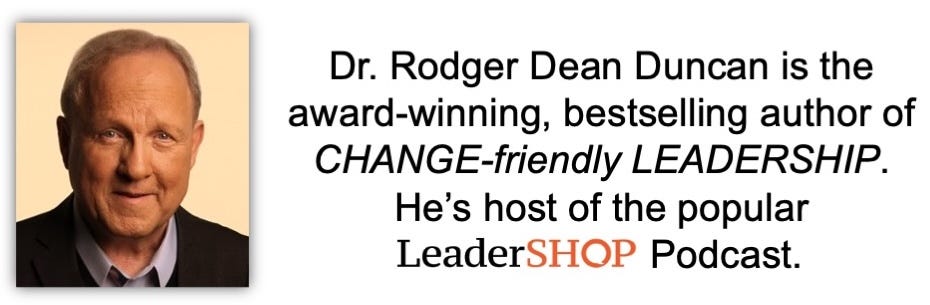
By Rodger Dean Duncan
Molly Fletcher is a force of nurture.
That’s not a typo. Nurture.
As a sports agent in a male-dominated industry, this peak performance expert represented more than 300 of the world’s top athletes. Today she shares her learnings as a popular keynote speaker and podcaster. Her book is Dynamic Drive: The Purpose-Fueled Formula for Sustainable Success.
Fletcher unveils what she believes to be the framework required to pursue your goals unapologetically. It’s not just about building drive, she says, but sustaining it while aligning with clear values and purpose. This framework is composed of what she calls the 7 Keys to Unlock Your Dynamic drive:
Mindset – a set of beliefs that shape how you see the world and yourself
Energy – the fuel that allows your best self to engage fully in life’s demands
Discipline – the process that takes you from where you ae to s=where you want to be
Curiosity – the spark that ignites curiosity
Resilience – the mental toughness to repeatedly get back up BETTER when you’re knocked down
Connection – the link or positive energy between people
Confidence – your secret weapon that makes you unstoppable
What exactly is dynamic drive, and what effect does it have on a person’s performance both personally and professionally?
“Dynamic Drive is the spark that ignites and fuels the joyful pursuit of a better life. It combines the urgency of traditional drive with a purpose-driven evolving nature,” Fletcher says. “In a world obsessed with quick wins and superficial achievements, we often lose sight of the deeper meaning behind our pursuits. The secret isn’t just in setting and achieving goals. It’s about aligning those goals with a deeper sense of purpose which naturally propels us towards the pursuit of better.”
She offers an example: “Let’s say I sell HR software and my goal is to hit $10 million in sales and get a promotion. I achieve my goal. Now what? I set a higher target. Great. But eventually, it gets hard to stay motivated. If I connect with a deeper purpose—such as to help people reach their career potential and to support my family in a way that allows us to take trips and have adventures together—those things will be much more deeply motivating than any sales target or job title. While putting these ideas into practice can be challenging, this is the essence of dynamic drive.”
How did Fletcher land on the seven particular “keys” she writes about?
“I started noticing these keys in my work with professional athletes as a sports agent,” she says. “While the world saw the moment of triumph (or defeat), I observed the drive that led these world-class athletes to get up every day and keep pushing harder and harder, regardless of the outcome. Interestingly, when I connected with my own dynamic drive and pivoted into corporate speaking and consulting, I found that the same factors distinguished those who thrived in their careers from those who struggled.”
Fletcher writes about what she calls the “complacency epidemic.” For people who aren’t driven already, how can they avoid falling victim to complacency?
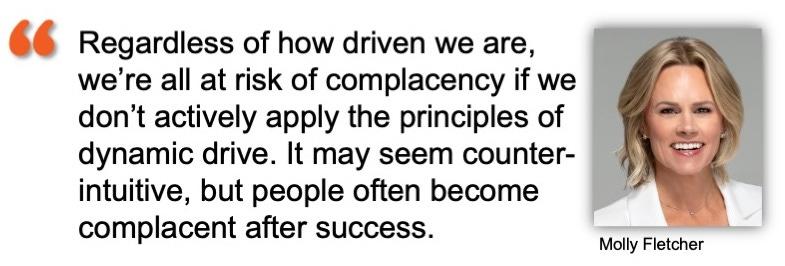
“Regardless of how driven we are, we’re all at risk of complacency if we don’t actively apply the principles of dynamic drive,” she says. “It may seem counterintuitive, but people often become complacent after success. And of course, if we aren’t motivated in the first place, complacency is almost inevitable. The solution in both cases is the same: be intentional about how we direct our energy and connect with our deeper purpose. When we keep that purpose in mind, it becomes much harder to fall into complacency.”
What can business leaders do to build workplace cultures that boost worker engagement?
Fletcher says the most important thing is to help people activate their personal drive and connect it to a clear vision of their professional potential. “People want their work to have meaning and contribute to something larger than themselves,” she says. “Research from McKinsey found that 85% of people feel they have a purpose, and about 70% define that purpose through their work. This presents a significant opportunity for leaders to boost engagement. Lead conversations about the larger ‘why’ of the business and encourage people to tap into their own deep purpose.”
How can a carefully crafted purpose statement help a person thrive in both personal and professional environments?
“A purpose statement is a compass that can guide us through the inevitable moments of discomfort and uncertainty,” she says. “Crafting a purpose statement forces you to explore a deeper understanding of your values, passions, and what truly matters to you. When you’re faced with difficult choices or challenges, this clarity is invaluable.”